Translate to:
Follow:

Encumbrance Accounting: Ensuring Financial Accuracy and Efficiency

Post by

These encumbrances can usually be found in the records of the local county recorder or land records office. An encumbrance can also restrict the uses to which property can be put, such as zoning laws that limit the types of construction on a plot of land. An encumbrance balance refers to restricted funds that have been set aside for known future expenses of a company. Encumbrances are accounted for in the balance sheet as reserved fund balances and can be encumbrance accounting definition adjusted or carried forward at the end of a financial year. This helps you accurately report financial data at the end of the year by verifying them and adjusting encumbrances against POs or other documents. Encumbrance accounting helps companies track their budget and catch overspending in any category.

Benefits

Encumbrances actually aren’t classified as assets or as liabilities on the balance sheet.

The main currency used by the organization to conduct its operations is used when encumbering the items. In the second step, the items are unencumbered once they’ve been transferred to accounts payable. Encumbrance accounting involves recording encumbrances in the general ledger when the organization is certain about the time and amount of the anticipated expense. This is done before creating and collecting the underlying documents, such as purchase requisitions and purchase orders. Encumbrance accounting is often used as a planning tool for budgetary control, particularly in government organizations using government accounting standards and nonprofits. By keeping encumbrances up-to-date, finance leaders can ensure accurate budget visibly, allowing them to manage cash flow and spending with confidence.

Budgeting

It is difficult to transfer an encumbered property, so the property owner has a strong incentive to settle the underlying claim. A business or government can encumber funds in several ways and for several reasons. Browse hundreds of articles, containing an amazing number of useful tools, techniques, and best practices. Many readers tell us they would have paid consultants for the advice in these articles. Again, using the example above, once the equipment has been purchased, it is no longer an encumbrance and is considered an expense.

Download a free copy of "Preparing Your AP Department For The Future", to learn:

This practice ensures that there is no overspending and that funds are available when needed for their intended use. The concept of encumbered amounts is integral to comprehensive financial management, serving as a bridge between budgeting and actual expenditure. By delving into the nature of these funds, their various forms, and the accounting practices that govern them, we can better understand their role in the broader context of financial planning and control. Throughout this article, we have explored the definition of encumbrance accounting and its significance in financial operations. We have discussed the various types of encumbrances, the process of recording and reporting encumbrances, and provided practical examples to illustrate their application in real-world scenarios. While both encumbrance accounting and accrual accounting involve tracking financial obligations, they serve different purposes.

When an organization creates a new purchase order or adds a new line item to an existing purchase order, the new items are encumbered to the journal. An entry is made in the journal with a debit to the encumbrance account and transferred to the general ledger. Finance leaders often put controls in place to manage and predict spending, from limiting access to company cards to dynamic budgets to real-time forecasting software. Encumbrance helps ensure you have enough funds to pay your expenses and enables you to manage and budget better. Now that we understand how encumbrances are recorded and reported, let’s explore some practical examples to further illustrate the concept. Yes, encumbrances can be modified or canceled if there are changes in the initial commitments.

By recording anticipated expenses as encumbrances, organizations ensure that funds are allocated for specific purposes and remain available when the actual costs are incurred. Encumbrance accounting offers numerous advantages, including improved financial management, better budget control, and more accurate predictions of cash outflow. Public finance, which encompasses the budgeting and expenditure processes of government entities, is an area where encumbrances are particularly prevalent. Encumbrance accounting in public finance also promotes transparency and accountability, as it allows citizens to see where funds are being committed in advance of actual spending. Overall, encumbrance accounting serves as a crucial tool for effective budget management, accurate financial reporting, informed decision making, and maintaining financial control and accountability.

It is up to your company to decide which items will be the most helpful for them to track to more accurately predict and track cash flow. An Encumbrance is a type of transaction created on the General Ledger when a Purchase Order (PO), Travel Authorization (TA), or Pre-Encumbrance (PE) document is finalized. When an encumbrance is established, the organization’s financial manager should ensure funds will be available for payment of the transaction, in accordance with the overall life-cycle of the contract.

Recording and Reporting Encumbrances

Recognizing encumbrances during the budgeting process helps organizations avoid overspending by clearly showing which funds are already committed. It gives finance teams visibility into remaining available funds and helps ensure compliance with internal and external spending limits. Understanding the impact of these reserved funds is essential for stakeholders ranging from finance professionals to policymakers. It influences not only current spending but also future financial commitments and strategic initiatives. As such, it’s important to examine how encumbered amounts affect overall financial health and operational stability. The encumbrance process begins when the companies identify the need to purchase goods or services on credit.

This can be done for future vendor payments against purchase orders or purchase requisitions or can be set aside for tax, mortgage, debt or legal payments. Encumbrance is performed in three steps - pre-encumbrance, encumbrance and expenditure and is recorded in two journal entries. Financial statements indicate how budgetary resources are allocated to payment commitments before the actual expenditure incurs with encumbrance accounting. By incorporating encumbrance accounting practices, organizations can optimize their financial resources and foster financial stability and success. By implementing encumbrance accounting, companies can enhance their financial stability, allocate resources effectively, and make informed decisions based on reliable financial data.

Understand the role of encumbered funds in effective financial planning and how they influence budgeting and public finance management. The accounting term encumbrance can sometimes be mistaken for real estate encumbrance. When a real estate property has a lien or easement, it is considered encumbered. Encumbrances are not considered actual expenses and are not included in actual-expense balances. With Encumbrances, no payments leave the University and no actual expense would be generated on a ledger, since it is an expectation of a future actual transaction. Encumbrances should be monitored regularly to ensure accurate tracking of financial commitments.

With how essential an accurate fund balance is, there are many ways accounting teams have tried to track this data. One type of accounting that hopes to anticipate future budgets better and provide budgetary control options is encumbrance accounting. From the setup of a more precise budget amount to avoiding red spending flags, encumbrance accounting can help your company have more accurate and helpful general book sets. Encumbrance accounting is a financial management technique that tracks and reserves funds for future obligations, such as purchase orders or contracts, ensuring budgetary control and transparency. The budgeting process benefits from the inclusion of encumbered funds as it provides a comprehensive view of both current and future financial positions.

  • A business or government can encumber funds in several ways and for several reasons.
  • If the borrower cannot repay the mortgage, the lender may foreclose, seizing the house as collateral and evicting the inhabitants.
  • It means that some party has placed a claim on the property that affects what the property owner may do with it.

As companies strive for greater efficiency and transparency in their financial operations, encumbrance accounting proves to be an essential component of successful financial management. Encumbrance accounting can be tracked manually or through specialized systems like Oracle General Ledger. These systems generate encumbrance reports and provide tools to monitor and analyze encumbrance balances and activity. This enables better financial analysis and decision-making, as organizations can assess their budgetary performance and make adjustments as needed.

The Importance of Emergency Funds and How to Build Yours

  • By accurately recording and tracking encumbrances, businesses can avoid overspending and ensure that they have enough funds to cover their commitments.
  • A downside of encumbrances is that they increase the complexity of government accounting to some extent.
  • Then, the procuring company converts the encumbrance into an expenditure by transferring the transacted items from the encumbrance account into accounts payable.
  • This aids your accountants in timely book closing and adding journal entries when an encumbrance has been paid.
  • Encumbrance data enables budgetary control, letting your company better understand where they are financially at any given time.

This proactive approach plays a critical role in financial management, especially for organizations operating under tight fiscal controls or fixed annual budgets. The concept is most commonly used in governmental accounting, where encumbrances are used to ensure that there will be sufficient cash available to pay for specific obligations. By using encumbrances, a government entity can be assured that it will not over-extend its finances. A downside of encumbrances is that they increase the complexity of government accounting to some extent. Encumbrances are payment commitments owed to a company’s vendor or creditors for goods and services that have not been received yet. The company has set aside this amount, but hasn't been paid yet as the goods or services haven’t been supplied.

Monitor and Adjust Encumbrances

Both privately owned and publicly owned businesses can use encumbrance accounting to better manage their upcoming commitments and expenditures. The purpose of encumbrance accounting is to set aside funds for future financial transactions that are yet to be paid. This intent implies that the business is highly likely to spend money in the future, which implies a commitment to make a purchase. By reserving funds for anticipated expenses, encumbrance accounting gives organizations better visibility and control over their budgets.

The process of encumbrance accounting involves creating encumbrance journal entries after purchase requisitions and purchase orders. These encumbrances can be tracked manually or automatically through specialized systems like Oracle General Ledger. Reports and tools are available to monitor and analyze encumbrance balances and activity.


Double Declining Balance Method: Formula & Free Template

Post by
how to do double declining balance

The double declining balance depreciation method is a form of accelerated depreciation that doubles the regular depreciation approach. It is frequently used to depreciate fixed assets more heavily in the early years, which allows the company to defer income taxes to later years. Choosing the right depreciation method is essential for accurate financial reporting and strategic tax planning. The double declining balance method offers faster depreciation, suitable for assets that lose value quickly, while the straight line method spreads costs evenly over the asset’s useful life. real estate cash flow The double declining balance method is considered accelerated because it recognizes higher depreciation expense in the early years of an asset’s life. By applying double the straight-line depreciation rate to the asset’s book value each year, DDB reduces taxable income initially.

how to do double declining balance

How to Apply Declining Balance Depreciation Formula in Excel: 6 Examples

  • Understanding the pros and cons of the Double Declining Balance Method is vital for effective financial management and reporting.
  • The annual straight-line depreciation expense would be $2,000 ($15,000 minus $5,000 divided by five) if a company shells out $15,000 for a truck with a $5,000 salvage value and a useful life of five years.
  • Explore the double declining balance method for depreciation, focusing on calculation, adjustments, and financial reporting insights.
  • The company ABC has the policy to depreciate the machine type of fixed asset using the declining balance depreciation with the rate of 40% per year.
  • Calculate it by dividing the total cost minus salvage value by the estimated total units the asset will produce or hours it will operate over its life.
  • Implement our API within your platform to provide your clients with accounting services.

Depreciation is the process of allocating the cost of a tangible asset over its useful life. It reflects the asset’s reduction in value due to wear and tear, obsolescence, or age. Depreciation helps businesses match expenses with revenues generated by the asset, ensuring accurate financial reporting. Companies will typically keep two sets of books (two sets of financial statements) – one for tax filings, and one for investors. Companies can (and do) use different depreciation methods for each set of books. Explore the nuances of double declining balance depreciation, its calculation, and how it compares to other methods.

Double-Declining Balance (DDB) Depreciation Method: Definition and Formula

how to do double declining balance

Calculate it by dividing the total cost minus salvage value by the estimated total units the asset will produce or hours it will operate over its life. Multiply this rate by the actual units produced or hours operated each year to get your depreciation expense. Each normal balance year, when you record depreciation expenses, it lowers your business’s reported income, potentially reducing your taxes.

Basic depreciation rate

We now know the formula for calculating the depreciable cost for subsequent years, so let's calculate the depreciable cost for year two. Once you calculate the depreciable cost each year, just calculate the depreciation expense of 40%. On the other hand, a double-declining balance decreases over time because you calculate it off the beginning book value of each period. It does not take salvage value into consideration until you reach the final depreciation period.

Can you switch to another depreciation method later?

To calculate the depreciation expense of subsequent periods, we need to apply the depreciation rate to the laptop’s carrying value at the start of each accounting period of its life. The most basic type of depreciation is the straight line depreciation method. So, if an asset cost $1,000, you might write off $100 every year for 10 years. The formula used to calculate annual depreciation expense under the double declining method is as follows. The Excel DB function returns the depreciation of an asset for a specified period using the fixed-declining balance method.

  • Accelerated depreciation techniques charge a higher amount of depreciation in the earlier years of an asset’s life.
  • So, if an asset cost $1,000, you might write off $100 every year for 10 years.
  • As the declining balance depreciation uses the net book value in the calculation, the company doesn’t need to determine the depreciable cost like other depreciation methods.
  • In this case, when the net book value is less than $500, the company usually charges all remaining net book balance into depreciation expense directly when it uses the declining balance depreciation.
  • This comparison of a popular DIY bookkeeping product and Accracy's full-service online solution will help you choose which is best for your small business.
how to do double declining balance

Since the double declining balance method has you writing off a different amount each year, you may find yourself crunching more numbers to get the right amount. You'll also need to take into account how each year's depreciation affects your cash flow. As the declining balance depreciation uses the net book value in the calculation, the company doesn’t need to determine the depreciable cost like other depreciation methods.

Method 1 – Using DB Function in Excel

Make sure to check with a tax professional to get this right and make the most of possible tax benefits. Each year, as your assets get older and less efficient, their value decreases. Depreciation lets you record this decrease in value on your financial statements. It turns the initial cost of the asset into an ongoing expense, spread across the asset’s useful life, giving you a more accurate financial picture. The double-declining method involves depreciating an asset more heavily in the early years of its useful life. A business might write off $3,000 of an asset valued at $5,000 in the first year rather than $1,000 a year for five years as with straight-line depreciation.

  • Suppose you have a company car that costs $100,000, has a useful life of 10 years, and a salvage value of $10,000.
  • If, for example, an asset is purchased on 1 December and the financial statements are prepared on 31 December, the depreciation expense should only be charged for one month.
  • Let’s examine the steps that need to be taken to calculate this form of accelerated depreciation.
  • For instance, if an asset has a life of five years, the sum of the years’ digits would be 15 (5+4+3+2+1).

When the depreciation rate for the declining balance method is set as a multiple, doubling the straight-line rate, the declining balance method is effectively the double-declining balance method. Over the depreciation process, the double depreciation rate remains constant and is applied to the reducing book value each depreciation period. However, when the depreciation rate is determined this way, the method double declining balance method is usually called the double-declining balance depreciation method.

Double Declining Balance Method DDB Formula + Calculator

Post by
how to calculate double declining depreciation

For instance, if a car costs $30,000 and is expected to last for five years, the DDB method would allow the company to claim a larger depreciation expense in the first couple of years. This not only provides a better match of expense to the car’s usage but also offers double declining balance method potential tax benefits by reducing taxable income more significantly in those initial years. With the constant double depreciation rate and a successively lower depreciation base, charges calculated with this method continually drop. The balance of the book value is eventually reduced to the asset's salvage value after the last depreciation period.

What are other accelerated depreciation methods?

We now have the necessary inputs to build our accelerated depreciation schedule. But before petty cash we delve further into the concept of accelerated depreciation, we’ll review some basic accounting terminology. To calculate it, you take the asset’s starting value, find its useful life, and then multiply the starting value by double the straight-line rate. Double Declining Balance Depreciation is a way to calculate how much value an asset loses over time. The carrying value of an asset decreases more quickly in its earlier years under the straight line depreciation compared to the double-declining method. Depreciation in the year of disposal if the asset is sold before its final year of useful life is therefore equal to Carrying Value × Depreciation% × Time Factor.

how to calculate double declining depreciation

Why & When To Use the Double Declining Balance Method

Sara wants to know the amounts of depreciation expense and asset value she needs to show in her financial statements prepared on 31 December each year if the double-declining method is used. For example, if an asset has a salvage value of $8000 and is valued in the books at $10,000 at the start of its last accounting year. In the final year, the asset will be further depreciated by $2000, ignoring the rate of depreciation. Another thing to remember while calculating the depreciation expense for the first year is the time factor.

how to calculate double declining depreciation

Declining Balance Depreciation Calculator

how to calculate double declining depreciation

For reporting purposes, accelerated depreciation results in the recognition of a greater depreciation expense in the initial years, which directly causes early-period profit margins to decline. In summary, understanding these advanced topics helps ensure accurate financial reporting and compliance with accounting standards. Since the assets will be used throughout the year, there is no need to reduce the depreciation expense, which is why we use a time factor of 1 in the depreciation schedule (see example below). If, for example, an asset is purchased on 1 December and the financial statements are prepared on 31 December, the depreciation https://www.bookstime.com/ expense should only be charged for one month.

how to calculate double declining depreciation

What assets are DDB best used for?

You can calculate the double declining rate by dividing 1 by the asset’s life—which gives you the straight-line rate—and then multiplying that rate by 2. The DDB method accelerates depreciation, allowing businesses to write off the cost of an asset more quickly in the early years, which can be incredibly beneficial for tax purposes and financial planning. An asset for a business cost $1,750,000, will have a life of 10 years and the salvage value at the end of 10 years will be $10,000. You calculate 200% of the straight-line depreciation, or a factor of 2, and multiply that value by the book value at the beginning of the period to find the depreciation expense for that period. The amount of final year depreciation will equal the difference between the book value of the laptop at the start of the accounting period ($218.75) and the asset’s salvage value ($200).

  • The steps to determine the annual depreciation expense under the double declining method are as follows.
  • It’s ideal to have accounting software that can calculate depreciation automatically.
  • The double declining balance depreciation method is a way to calculate how much an asset loses value over time.
  • A common mistake is forgetting to adjust the final year’s depreciation to not drop below the salvage value.
  • By integrating AI, companies can ensure precise and efficient handling of their asset depreciation, ultimately improving their financial operations.

Standard declining balance uses a fixed percentage, but not necessarily double. Both methods reduce depreciation expense over time, but DDB does so more rapidly. Leveraging AI in accounting allows businesses to focus on strategic decision-making, reduce errors, and enhance overall financial management. By integrating AI, companies can ensure precise and efficient handling of their asset depreciation, ultimately improving their financial operations. Multiply the straight line depreciation rate by 2 to get the double declining depreciation rate.

What Is Nasdaq? an Overview of the Tech-Driven Stock Exchange

Post by

The second important index is the Nasdaq 100, which is a modified capitalisation-weighted index made up of the 100 largest companies in market value that trade on the exchange. Again, while these companies cover a range of market sectors, the largest are generally technology-related. To invest in Nasdaq stocks, you can look up the individual companies listed on the Nasdaq and purchase individual shares using your online brokerage account. However, purchasing individual stocks can be risky, and you’ll have to buy shares of multiple companies to diversify your portfolio and minimize the risk that you might lose money overall if one company does poorly. Although the NASDAQ is best regarded as the go-to-place for innovative technology-based stocks, it also lists companies from a range of other industries. This includes organizations from within the Finance, Energy, Transportation and Healthcare sectors.

Popular index ETFs include SPY (S&P 500), QQQ (NASDAQ-100), and IWM (Russell 2000). Various investment products like ETFs (Exchange-Traded Funds) and index funds are built to track specific indices. These products allow investors to gain exposure to entire markets or sectors by purchasing a single security that mirrors the index's performance. Nasdaq is a very large index, containing approximately 3,000 common stocks listed on the exchange. By contrast, the Dow Jones Industrial Average (DJIA)—another index major benchmark for the U.S. stock market—tracks just 30 stocks. And in the middle, as its name suggests, the S&P 500 tracks the performance of 500 of the biggest companies in the U.S.

"The story of Nasdaq's first five decades highlights its impact on trading today," he wrote. "The introduction of computers to markets, and sharing of quote data more widely, led to the automation of trading." Today, the Nasdaq plays an important role in markets and the economy, with its two major indexes — the Nasdaq Composite Index and the Nasdaq 100 Index — closely watched barometers of business. More recently, the Nasdaq has seen strong performance driven by the boom in artificial intelligence spending, with many companies seeing their stocks soar on the back of AI optimism. Time will tell whether the underlying businesses can generate enough cash to justify their lofty valuations. The index may also be used by investment managers as a benchmark to measure their funds’ performance against.

What Nasdaq Is, History, and Financial Performance

As AI and automation continue to grow, we can expect to see more tech companies listed on the NASDAQ. This could drive the index higher, but it could also increase volatility. The NASDAQ Composite Index is often seen as a barometer for the health of the tech sector and the broader economy. When the index is up, it generally means that investors are confident in the future prospects of the companies in the index. There are about 7,000 Nasdaq-listed securities as of September 2024, but as mentioned previously, not every type of bull flag rules security is included in the Nasdaq Composite index. The level of the Nasdaq Composite Index fluctuates continuously during stock market trading hours.

The index value is then calculated by dividing the total market value by a divisor. This divisor is adjusted when there are corporate actions, like stock splits, to make sure the index value isn't affected. Get stock recommendations, portfolio guidance, and more from The Motley Fool's premium services. An index fund is essentially a fund that aims to track the price of an index like-for-like. How close the index fund gets to the official index depends on a number of factors.

  • The Nasdaq 100 is one of the most popular stock indexes because of its strong exposure to the world’s hottest tech stocks.
  • Share weights for each stock are then multiplied by that stock's closing price and the total divided by an index divisor that accounts for market fluctuations such as stock splits, mergers, and other actions.
  • Nasdaq has extensive listing requirements for initial public offerings (IPOs), spin-offs, direct listings and special purpose acquisition companies (SPACs).
  • The NASDAQ Composite Index is often criticized for being too heavily weighted towards tech stocks.
  • This allows you to track different indices and compare their performance.

This all changed after the flash crash of 1987, when it was realized that telephone trading took too long, and the exchange moved to an all-electronic system. Your knowledge hub for technology, gaming, travel, entertainment, sports, finance, education, health, programming and more. Changes to U.S. securities laws or international trade agreements could have a big impact on the NASDAQ Composite Index. Many of the companies in the NASDAQ Composite Index are growth companies that don't pay dividends. This means that the index may not be suitable for income-oriented investors.

The Motley Fool reaches millions of people every month through our premium investing solutions, free guidance and market analysis on Fool.com, top-rated podcasts, and non-profit The Motley Fool Foundation. When it comes to investing in the NASDAQ stock exchange, you don’t actually invest in the exchange platform itself. In order to ascertain how companies listed on the NASDAQ have performance historically, it is crucial to make reference to one axitrader review of the platform’s leading index trackers.

Investing

Rather than monitoring thousands of individual stocks, indices provide a single reference point. This simplification makes it much easier to understand broad market movements and trends without getting lost in the details of individual securities. Stock market indices function like carefully curated baskets of stocks. Each index has a specific list of companies included based on various criteria.

OpenAI Sets New Price Point with GPT-4.5 Release

In comparing various financial products and services, we are unable to compare every provider in the market so our rankings do not constitute a comprehensive review of a particular sector. While we do go to great lengths to ensure our ranking criteria matches the concerns of consumers, we cannot guarantee that every relevant feature of a financial product will be reviewed. However, Forbes Advisor Australia cannot guarantee the accuracy, completeness or timeliness of this website. But whether the buying and selling takes place in physical or virtual space, it’s facilitated by a network of investment firms called market makers. These firms hold and exchange the individual securities listed on any stock exchange, executing the trades you order when you decide to buy shares of stock.

How We Make Money

These may contain hundreds or thousands of companies’ stocks, depending on the index you select, which instantly diversifies your portfolio. Since there is a high concentration of technology firms listed on the Nasdaq stock exchange, the Nasdaq Composite is generally considered a stand-in for the performance of the overall tech industry. The index's value is calculated by summing the market capitalization of its components based on the current price of the constituents.

The Nasdaq is the second largest exchange after the NYSE based on market capitalization, or the total dollar value of all of the shares of companies that trade on it multiplied by the number of shares outstanding. These range from large-cap tech giants like Apple and Microsoft to small-cap growth companies. To be included in the index, a company must be listed on the NASDAQ stock exchange and meet certain liquidity requirements.

Most notably, this is whether the fund is actively or passively managed. If you’re looking to find out exactly what the NASDAQ actually is, how it works and what sort of companies it lists, then you’ve come to the right place. We’ll also explain how you can make an investment in to the NASDAQ yourself. For the past seven years, Kat has been helping people make the best financial decisions for their unique situations, whether they're looking for the right insurance policies or trying to pay down debt. Kat has expertise in insurance and student loans, and she holds certifications in student loan and financial education counseling. The Nasdaq Composite closed at a record high of 16,057.44 on Nov. 19, 2021.

Strategy Stock Retreats 16% as Bitcoin Dips Below $90,000

The exchange itself is a dealers’ market, so brokers buy and sell stocks through a market maker rather than from each other directly. A market maker handles a specific stock and holds a certain amount of stock in his or her books. When a broker wants to purchase shares, he or she does it directly from the market maker. Tech companies are drawn to the Nasdaq because of its reduced fees, easier listing requirements (compared to the NYSE), and the fact that it is known for listing a long-term secrets to short-term trading by larry williams wide range of tech stocks. The Nasdaq is known for listing growth stocks, which is a good fit for tech firms.

  • For example, on any given day, you might notice that the NASDAQ is down 0.4% while the S&P 500 is only down 0.1%, indicating that technology stocks are underperforming the broader market.
  • The weighting of companies included in the Nasdaq 100 is rebalanced once a quarter, in March, June, September and December.
  • Kat has expertise in insurance and student loans, and she holds certifications in student loan and financial education counseling.
  • After the financial crisis, the NASDAQ Composite Index entered a long bull market.
  • It's a broad-based index, meaning it represents a wide range of industries and company sizes.

The Nasdaq Composite tracks the vast majority of the stocks listed on the Nasdaq Stock Market. It has outperformed the broader S&P 500 on an average annual return basis over the past 10 years (16% vs 13%). Typically, when an investor says "the Nasdaq," they're referring to the Nasdaq Composite, or IXIC. This is an index that tracks the performance of the Nasdaq Stock Market, an electronic platform used to buy and sell securities. And the Nasdaq Stock Market is run by financial services firm Nasdaq (NDAQ). For most retail investors, especially beginners, a core holding of broad market index funds combined with specific sector or theme ETFs based on your outlook and risk tolerance is a sound approach.

Most are in the fields of technology, consumer services, and health care. The Nasdaq Composite is important because it is one of the three most popular indexes measuring the performance of the U.S. equity market. And because it is so top-heavy in technology stocks, it is typically seen as a barometer of the health of the tech sector.

Vegas Online Casinos, Best Las Vegas Online Casinos 2025

Post by

You can also claim various reload bonuses, enjoy exciting tournaments, contests, and more at this Vegas casino online. Coming up next, we have Super Slots, our top pick when it comes to Vegas online casino slots. There is then a wealth of deposit bonuses and free spins to claim each day at Slots of Vegas. Plus, you’ll also find a VIP program here, which nets you daily free spins and other prizes.

Popular Online Las Vegas Casino Games

You’ll see mechanics such as Megaways or cluster pays, quick spins, and clear volatility labels so you can decide between steady taps or swingy spikes. The top online casinos launch with the same core pillars you know, plus faster engines and cleaner lobbies. Think of these genres like loadouts — pick the pace and risk profile that fits your session. Plus, with so many progressive payouts (including bingo, poker, and classic slots), there are big wins waiting for every playstyle.

Las Vegas Online Casino Games

Like many popular games, lovers of craps are spoiled for choice, thanks to the multiple variations available. Online casinos in Vegas have the Simplified, High Point, Die Rich and Crapless craps variants on offer. In terms of payouts, roulette games are one of the most rewarding games at Vegas casinos. They offer RTP rates of up to 98% in addition to fast payouts and interesting rule variations. When people think of Vegas, they think of the bright lights and the big city.

  • Most top sites feature 10–20 of these alternative games, giving players a chance to try something new and unexpected.
  • In Nevada, around 3% of individuals are estimated to be at risk of problem gambling.
  • We consider how it's connected to related casinos, factoring in shared revenues, complaints, and practices to provide a more holistic safety rating.
  • Overall, Ignition is one of the best online casinos that payout instantly, especially if you prefer fast and secure crypto transactions.
  • There are 10+ FreshDeck tables covering blackjack, roulette, and baccarat (live lobby appears once you’re logged in).

To cater to the teeming online audience, many casinos also have a large library of highly rewarding and exciting video slots. You can enjoy all kinds of fun and engaging themes, including old style fruit machines, safari and other wildlife, ancient history, mythology and Wild West slot games. Casino Las Vegas runs on the famous Playtech software platform and has a reputation for its varied bonuses, great customer service and fascinating promotions.

Slots.lv is a breezy, tap-and-go lobby perfect for quick dopamine hits. Slots, scratchers, crash games, and video bingo offer arcade-style gameplay that does more than swallow your roll of quarters. These spins are spread out over the first 10 days, and while it’s not the biggest bonus on our list, it will give players a nice taste of what’s in store. Players can use WILD250 to get a 250% match first-deposit bonus worth up to $2,500 plus 50 free spins.

And it’s especially difficult when the truly reputable operators are few and far between. With thousands of online casinos accessible in the region, choosing the best is entirely down to personal opinion. However, our top list highlights the best casinos in Las Vegas judged against multiple different metrics.

Your One-stop Shop for Gambling from the Comforts of Your Own Home!

Dive in the best casino experience possible and go live, play live dealer games. Known as a pioneer of progressive jackpot slots, Microgaming offers substantial payout potential through games like Mega Moolah, appealing to players seeking big jackpots at casinos such as Jackpot City. They sit alongside other non-traditional titles like Plinko, Scratch Cards, and the slot–bingo hybrid Slingo, which mix casual gaming with casino-style payouts. Most top sites feature 10–20 of these alternative games, giving players a chance to try something new and unexpected. You will also be able to find some more niche options in this section too, like Craps, Keno, and Sic-Bo.

  • Its interface is optimized for both performance and consistency with the desktop version.
  • Black Lotus delivers some of the fastest withdrawals among the best Las Vegas online casinos, but that’s far from its only trick.
  • Your friend might also need to meet a few basic criteria, like verifying their account or placing a bet.

You’ll find the world’s top online slot games, replicated just as you would find them at Bellagio, Mandalay Bay or Caesars Palace. The biggest casinos on the Vegas Strip have nearly 3,000 individual slot machines and we’re not far behind with literally hundreds upon hundreds to choose from. Most casinos offer well over 1,000 games from top-tier providers like Pragmatic Play, NetEnt, and Evolution Gaming. The majority are slots, supplemented by table games and, often, a live casino. For all intents and purposes, there’s only one way to play real-money Vegas casino games on mobile, and that’s to use one of the international gambling sites featured here. Many players stick with the “Big Three” Vegas casino games above, but video poker more than holds its own.

Most recently, the Golden Gate Hotel & Casino announced it will be forgoing live dealers, shifting to electronic table games (ETG). Online slot games like Gonzo’s Quest and Viking Runecraft famously use this mechanic, and add their own special twists on the basic game. For example Viking Runecraft online slot allows you to collect runes that give you special powers from the gods, which transform mundane symbols into wilds or blow up whole rows of symbols to give you more wins. IGT's USP is its integration of land-based casino classics with online play, bringing iconic games such as Wheel of Fortune from physical casinos to digital platforms like Wheel of Fortune Casino. Specializing in visually stunning and innovative video slots, NetEnt is known for creating some of the most iconic games like Starburst and Gonzo's Quest.

While the design isn’t flashy, this Vegas casino online keeps things simple and efficient, exactly what most real money players are looking for. There’s also support for MatchPay and player vouchers, adding more flexibility. Overall, Ignition is one of the best online casinos that payout instantly, especially if you prefer fast and secure crypto transactions. You’ll only be able to see all the games once you create an account, with live dealer games unavailable to guests. Registered players get access to a slick, responsive website, and there’s an app you can download onto your iOS or Android device.

Recommended Videos

These new online casinos bring all that to the table, with stacked game libraries, specialty modes loaded with bonus perks, and promotions that actually feel rewarding. If you’re after a fun experience above all, at Las Vegas Casino we’ve got jackpot slots that include amazing bonus rounds straight out of video games and cinematic graphics direct from the silver screen. Every new Las Vegas Casino player automatically has their initial deposit matched by 100% at up to 200 credits, to enjoy some of the very best slots games around.

Boost your balance with coin package offers

The unfortunate reality is that so many shady dealers populate the online gambling sphere, while the top sites can be counted on just one or two hands. On the other hand, VIP players and high rollers can place huge bets, as long as it doesn’t exceed the maximum value. This way, casinos can meet the demands of different player classes while also fulfilling regulatory requirements. You can make cryptocurrency payments through your wallets or crypto cards, if you have one. This payment method takes considerably less time and offers lower fees compared to bank transfers. E-wallets are another legit and safe method to make deposits and receive your winnings at Las Vegas casinos.

Discover the latest in online gambling across Nevada, including legal updates, top casino apps, social gaming sites, and safe gaming practices. The live dealer feature in games like blackjack and roulette, is very encouraging and gives you the feeling of being right there in Las Vegas. The casino is available in the download and the flash instant play versions and the customer service at Casino Las Vegas is talked about a great deal.

Super Slots has a total of 1,300+ online casino games you can play, including over 1,000 real money slots and plenty of vegas casino apk download regular table games. These real-money platforms are chock-full of slots, table games, and live dealers, and pair exciting gameplay with more rewarding bonuses than a lot of the old standbys. Expect fast-loading lobbies, quicker cashiers, and responsive help channels. Wherever you are, the thrill of live dealer games and the expectation that roulette games grant like no other will be available on your mobile. Blackjack is the ultimate rapid-fire casino card game and it’s easy and fun to play this table game. Spend a little time learning the rules of blackjack, and if you’re a beginner, you can easily progress to make blackjack profits quickly right here at Las Vegas Casino.

Step 1: Register for a New Account

It has more than 300 high-quality games, a $2,500 welcome bonus, and much more. Visa, Mastercard, Discover, AMEX, wire transfer, and 15 different forms of cryptocurrency. No e-wallets at this time, unfortunately, but considering all the other options up for grabs, you won’t miss it. There are no e-wallets accepted here, so cards and crypto do all the heavy lifting. The payouts are fast across all payment types, but the weekly payout limitations are pretty severe on some options. Spinata Grande, Finn and the Swirly Spin, BerryBurst and Birthday are some of the best mobile slots games in the business, and they’re all available fully functional for your mobile device in our library.

Slots of Vegas is a retro, Realtime Gaming-driven lobby that feels purpose-built for jackpot chasers. Navigation is straightforward, sessions load fast, and the whole place gives “fire up a nightly grind and chase timers” energy — without a cluttered HUD. The tourism decline has been attributed to a combination of factors, including the impact of tariffs, the seasonal summer slowdown, and a surge in online gaming. This material may not be published, broadcast, rewritten, or redistributed.

For the rest of this article, our experienced gamblers will be reviewing the top online casino sites available in Las Vegas right now. They’ve got all the games and some of the glamour – but which ones are right for you? It combines a diverse game library with a $3,000 split welcome bonus and a surprisingly deep live-dealer lineup — multiple tables and limits that stay busy around the clock.

This Las Vegas online casino accepts more than 15 different cryptocurrencies, including Bitcoin, Cardano, Litecoin, Dogecoin, and Ethereum. The minimum deposit is $20, and you can deposit as much as $100,000 into your account if you wish. Expect small amounts or a few free spins with tighter playthrough and short expiry windows.

Stake.us, one of the largest US platforms, offers over 1,800 games, including 1,000+ slots, about 10 table games, and 15 live dealer titles, plus exclusive content. In contrast, a smaller site like High 5 Casino offers around 500 games, mostly slots. Quality matters more than quantity, but when a casino delivers both, it earns top marks. Las Vegas is known as the “Gambling Capital of the World,” and it probably always will be. NV gaming laws preclude regulated gambling venues from offering real-money casino games and apps online locally, and there is no movement within the state legislature to change that any time soon. Several online casinos in Las Vegas are known to offer swift payouts on winnings.

Equity Multiplier Ratio Analysis Formula Example

Post by

equity multiplier

Companies finance their assets through debt and equity, which form the foundation of both formulas. It shows that the company faces less leverage since a large portion of the assets are financed using equity, and only a small portion is financed by debt. http://iso100.ru/blog_group/14.html For some companies, a high equity multiplier does not always equate to higher investment risk.

equity multiplier

Which Is Better: A High or Low Equity Multiplier?

A high use of debt can be part of an effective business strategy that allows the company to purchase assets at a lower cost. This is the case if the company finds it is cheaper to incur debt as a financing method compared to issuing stock. We calculate the equity multiplier as average total assets divided by average total equity.

Instruction when using an Equity multiplier

In that case, it's possible ROE could have increased because the company was taking on debt. Additionally, a low equity multiplier is not always a positive indicator for a company. In some cases, it could mean the company is unable to find lenders willing to loan it money. A low equity multiplier could also indicate that a company's growth prospects are low because its financial leverage is low. If the company has effectively used its assets and is showing a profit that is high enough to service its debt, then incurring debt can be a positive strategy. However, this strategy exposes the company to the risk of an unexpected drop in profits, which could then make it difficult for the company to repay its debt.

A high debt ratio arises when the debt accrued to a company is high considering its balance sheet. It is not possible for total debts to be negative and it cannot be greater than the total assets. Let us also assume; Milkwater Company operates in the same industry as Waterfront Company. Milkwater has assets of $50 million and $25 million as stakeholder’s equity.

The equity multiplier and DuPont analysis

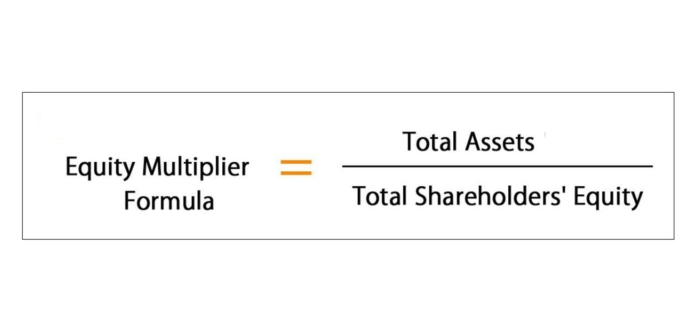
Still, the company has also significantly improved its profitability (income/sales) and how much sales it generates from its assets (sales/assets) over the same period. In other words, Illinois Tool Works is excellently sweating its assets, even http://furniterra.ru/members/1221/ if those assets were supported by taking on more debt. The equity multiplier is a financial ratio used to measure how a company finances its assets. Simply put, it's the assets of the company divided by shareholders' equity rather than debt. The equity multiplier is calculated by dividing the company's total assets by its total stockholders' equity (also known as shareholders' equity). There can be times when a high equity multiplier reflects a company's strategy that makes it more profitable and allows it to purchase assets at a lower cost.

equity multiplier

Relationship between debt ratio and equity multiplier

The table below shows a very impressive increase in ROE over the 2013 through 2022 period. Since the equity multiplier measures the leverage level of the company, the higher it is, the greater the extent of leverage. When investors compare the two companies, they are likely to invest in Watermilk.

Calculating the Debt Ratio Using the Equity Multiplier

When a firm is primarily funded using debt, it is considered highly leveraged, and therefore investors and creditors may be reluctant to advance further financing to the company. A higher asset to equity ratio shows that the current shareholders own fewer assets than the current creditors. A lower multiplier is considered more favorable because such companies are less dependent on debt financing and do not need to use additional cash flows to service debts like highly leveraged firms do. Equity multiplier (also called leverage ratio or financial leverage ratio) is the ratio of total assets of a company to its shareholders equity. A high equity multiplier means that the company's capital structure is more leveraged i.e. it has more debt. The equity multiplier is also used to indicate the level of debt financing that a firm has used to acquire assets and maintain operations.

  • The DuPont analysis looks at the various components of a company's return on equity -- in other words, earnings divided by shareholders' equity.
  • Equity multiplier is also known as financial leverage ratio or leverage ratio.
  • To gauge how the company is doing compared to its competitors, calculate the equity multiplier of its direct competitors.
  • Both creditors and investors use this ratio to measure how leveraged a company is.
  • A high equity multiplier shows that the company incurs a higher level of debt in its capital structure and has a lower overall cost of capital.
  • On the other hand, Verizon’s multiplier risk is high, meaning that it is heavily dependent on debt financing and other liabilities.

The values for the total assets and the shareholder’s equity are available on the balance sheet and can be calculated by anyone with access to the company’s annual financial reports. When a firm’s assets are primarily funded by debt, the firm is considered to be highly leveraged and more risky for investors and creditors. This also means that current investors actually own less of the company assets than current creditors. The equity multiplier is a ratio used to analyze a company’s debt and equity financing strategy. A higher ratio means that more assets were funding by debt than by equity. The equity multiplier is a useful tool for investors to monitor risk and understand how a company generates returns for investors.

What Is the Equity Multiplier?

In general, it is better to have a low equity multiplier because that means http://ilsanny.ru/news/3944-sony-pictures-bulletproof.html a company is not incurring excessive debt to finance its assets. Instead, the company issues stock to finance the purchase of assets it needs to operate its business and improve its cash flows. On the other hand, company DEF, which is in the same sector as company ABC, has total assets of $20 million and stockholders' equity of $10 million. This means company DEF uses equity to finance 50% of its assets and the remaining half is financed by debt.

Back to Top