Translate to:
Follow:

Expert Financial Support

Post by
accounting services seattle

Accountant Seattle offer a broad but extensive range of accounting services for our clients, which include business owners, executives and independent professionals in Seattle and Washington. Miss Bookkeeper is a Kirkland business that has been providing bookkeeping services to small businesses in the Greater Eastside area, Snohomish County, and Seattle for over two years. The business offers basic bookkeeping, advanced bookkeeping, start-up service, tune-up service, and QuickBooks set-up, training, and support. Bookkeeping services include payroll, invoicing, budgeting, billing and vender payments, transaction entry, financial statements, and tax filings.

Your Seattle Business Deserves More Than Just an Accountant

Linda M. Teachout, CPA, PLLC is a Shoreline business that has been serving individuals and businesses in the Greater Puget Sound area for over five years. The business’s commercial services are cash flow and budgeting, tax preparations, financial statements, tax compliance, and payroll services. Personal services are tax assistance, tax compliance, and financial planning. Linda has over 30 years of experience as a CPA and she is a member Accounts Receivable Outsourcing of the American Institute of Certified Public Accountants and the Washington State Society of Certified Public Accountants. Linda M. Teachout, CPA, PLLC is accredited by the Better Business Bureau and has an A+ rating.

accounting services seattle

Important Documents To Give Your Accountant for Tax Season

We'll handle your bookkeeping with accuracy and precision, providing you with the data you need to make informed decisions and grow your Seattle business. We'll help you keep more of your hard-earned money through proactive tax planning. Our team will provide a deep dive into your taxes, financial situation, and accounting practices to identify areas for improvement. At Count on That, we’re here to save you from the stress of accounting and finance, so that you can focus on your passion.
accounting services seattle

CFO Advisory

Over the years we have worked with many Seattle area businesses and individuals. Partner with Saguaro Accounting and experience financial transformation. Whether you need bookkeeping accounting services or advanced financial planning, our expert team is here to support your journey to success. Here at Accountant Seattle, we often find that one of the commonly requested services by our clients are tax preparation services. The best feature of our tax preparation services, and tax prep support is the specific clarity that we try to offer clients. Honest Buck Accounting is a Seattle business that has been serving clients for over eight years.

  • 1-800Accountant has amassed more than 100,000 clients and partners with the Florida Justice Association.
  • What was once possible or necessary in business – and especially accounting with newer technology – is now no longer realistic or relevant.
  • Overall Office Solutions is accredited by the Better Business Bureau and has an A+ rating.
  • Establish a strong financial foundation with our business formation & cash flow management services.
  • With our guidance you will have all the financial information you need to make the right decisions for the short and long-term success of your business.

Florina’s Accounting & Tax Services LLC

With our comprehensive bookkeeping, tax payments, and tax planning, you can rest assured that tax season will be a breeze. Our experienced bookkeepers will handle your monthly accounting needs, ensuring your records are always up-to-date and accurate. We'll clean up your books, organize your financial data, and ensure your accounting system is set up for success. Check out our testimonials to see how we’ve helped other small business owners build the support team they need. We tailor our consultations to each client’s individual situation, to offer recommendations that will best benefit the short-term and long-term growth of each business.

A Certified Public Accountant (CPA) is an accounting professional who is equipped with an education and skillset that can tackle accounting technicalities of any kind. Not only are our CPA’s highly educated within their fields, but also bookkeeping seattle possess the working experience relevant to ensure tasks are completed to the highest level and our clients are satisfied. Trained accountants and bookkeepers manage financial complexities and offer practical business solutions. Trained accountants and bookkeepers can assist in managing financial complexities and offer practical business advice.

  • Honest Buck Accounting offers an initial consultation and has three packages.
  • Book a demo today to see what running your business is like with Bench.
  • Many accountants Seattle based firms will want you to sign a contract or pay fees immediately, but we believe you shouldn’t have to pay anything before we begin to work with you.
  • The firm's monthly support includes filing scheduled City and State B&O returns, preparing end-of-year 1099s, and integrating third-party payroll platforms.

accounting services seattle

It offers a range of services, from designing and implementing accounting systems to handling daily bookkeeping and filing taxes. NSKT Global is led by Nikhil Mahajan, a certified fraud examiner and Sarbanes-Oxley expert. Its leadership team includes Dennis B. Kremer, a forensic, valuation, and litigation income statement support professional whose expertise spans more than four decades. For us, it’s important to offer high quality customer service alongside our bookkeeping for both individuals and businesses. Florina’s Accounting & Tax Services LLC is a Normandy Park business that serves individuals and businesses.

Other Washington Accountants

These could include bookkeeping, tax accountant and tax preparation services, QuickBooks training services, small business accounting services and more. Based in Seattle, CPA Seattle PS is an accountancy firm that provides its services to local individuals and businesses in Seattle and the surrounding areas. Moreover, it also offers IRS representation to federal and state agencies. Derek Morse, a CPA since 2001, has taken over operations of the firm in 2018. Accountant Seattle provides solutions to general accounting and tax related problems.


Encumbrance Accounting: Ensuring Financial Accuracy and Efficiency

Post by

These encumbrances can usually be found in the records of the local county recorder or land records office. An encumbrance can also restrict the uses to which property can be put, such as zoning laws that limit the types of construction on a plot of land. An encumbrance balance refers to restricted funds that have been set aside for known future expenses of a company. Encumbrances are accounted for in the balance sheet as reserved fund balances and can be encumbrance accounting definition adjusted or carried forward at the end of a financial year. This helps you accurately report financial data at the end of the year by verifying them and adjusting encumbrances against POs or other documents. Encumbrance accounting helps companies track their budget and catch overspending in any category.

Benefits

Encumbrances actually aren’t classified as assets or as liabilities on the balance sheet.

The main currency used by the organization to conduct its operations is used when encumbering the items. In the second step, the items are unencumbered once they’ve been transferred to accounts payable. Encumbrance accounting involves recording encumbrances in the general ledger when the organization is certain about the time and amount of the anticipated expense. This is done before creating and collecting the underlying documents, such as purchase requisitions and purchase orders. Encumbrance accounting is often used as a planning tool for budgetary control, particularly in government organizations using government accounting standards and nonprofits. By keeping encumbrances up-to-date, finance leaders can ensure accurate budget visibly, allowing them to manage cash flow and spending with confidence.

Budgeting

It is difficult to transfer an encumbered property, so the property owner has a strong incentive to settle the underlying claim. A business or government can encumber funds in several ways and for several reasons. Browse hundreds of articles, containing an amazing number of useful tools, techniques, and best practices. Many readers tell us they would have paid consultants for the advice in these articles. Again, using the example above, once the equipment has been purchased, it is no longer an encumbrance and is considered an expense.

Download a free copy of "Preparing Your AP Department For The Future", to learn:

This practice ensures that there is no overspending and that funds are available when needed for their intended use. The concept of encumbered amounts is integral to comprehensive financial management, serving as a bridge between budgeting and actual expenditure. By delving into the nature of these funds, their various forms, and the accounting practices that govern them, we can better understand their role in the broader context of financial planning and control. Throughout this article, we have explored the definition of encumbrance accounting and its significance in financial operations. We have discussed the various types of encumbrances, the process of recording and reporting encumbrances, and provided practical examples to illustrate their application in real-world scenarios. While both encumbrance accounting and accrual accounting involve tracking financial obligations, they serve different purposes.

When an organization creates a new purchase order or adds a new line item to an existing purchase order, the new items are encumbered to the journal. An entry is made in the journal with a debit to the encumbrance account and transferred to the general ledger. Finance leaders often put controls in place to manage and predict spending, from limiting access to company cards to dynamic budgets to real-time forecasting software. Encumbrance helps ensure you have enough funds to pay your expenses and enables you to manage and budget better. Now that we understand how encumbrances are recorded and reported, let’s explore some practical examples to further illustrate the concept. Yes, encumbrances can be modified or canceled if there are changes in the initial commitments.

By recording anticipated expenses as encumbrances, organizations ensure that funds are allocated for specific purposes and remain available when the actual costs are incurred. Encumbrance accounting offers numerous advantages, including improved financial management, better budget control, and more accurate predictions of cash outflow. Public finance, which encompasses the budgeting and expenditure processes of government entities, is an area where encumbrances are particularly prevalent. Encumbrance accounting in public finance also promotes transparency and accountability, as it allows citizens to see where funds are being committed in advance of actual spending. Overall, encumbrance accounting serves as a crucial tool for effective budget management, accurate financial reporting, informed decision making, and maintaining financial control and accountability.

It is up to your company to decide which items will be the most helpful for them to track to more accurately predict and track cash flow. An Encumbrance is a type of transaction created on the General Ledger when a Purchase Order (PO), Travel Authorization (TA), or Pre-Encumbrance (PE) document is finalized. When an encumbrance is established, the organization’s financial manager should ensure funds will be available for payment of the transaction, in accordance with the overall life-cycle of the contract.

Recording and Reporting Encumbrances

Recognizing encumbrances during the budgeting process helps organizations avoid overspending by clearly showing which funds are already committed. It gives finance teams visibility into remaining available funds and helps ensure compliance with internal and external spending limits. Understanding the impact of these reserved funds is essential for stakeholders ranging from finance professionals to policymakers. It influences not only current spending but also future financial commitments and strategic initiatives. As such, it’s important to examine how encumbered amounts affect overall financial health and operational stability. The encumbrance process begins when the companies identify the need to purchase goods or services on credit.

This can be done for future vendor payments against purchase orders or purchase requisitions or can be set aside for tax, mortgage, debt or legal payments. Encumbrance is performed in three steps - pre-encumbrance, encumbrance and expenditure and is recorded in two journal entries. Financial statements indicate how budgetary resources are allocated to payment commitments before the actual expenditure incurs with encumbrance accounting. By incorporating encumbrance accounting practices, organizations can optimize their financial resources and foster financial stability and success. By implementing encumbrance accounting, companies can enhance their financial stability, allocate resources effectively, and make informed decisions based on reliable financial data.

Understand the role of encumbered funds in effective financial planning and how they influence budgeting and public finance management. The accounting term encumbrance can sometimes be mistaken for real estate encumbrance. When a real estate property has a lien or easement, it is considered encumbered. Encumbrances are not considered actual expenses and are not included in actual-expense balances. With Encumbrances, no payments leave the University and no actual expense would be generated on a ledger, since it is an expectation of a future actual transaction. Encumbrances should be monitored regularly to ensure accurate tracking of financial commitments.

With how essential an accurate fund balance is, there are many ways accounting teams have tried to track this data. One type of accounting that hopes to anticipate future budgets better and provide budgetary control options is encumbrance accounting. From the setup of a more precise budget amount to avoiding red spending flags, encumbrance accounting can help your company have more accurate and helpful general book sets. Encumbrance accounting is a financial management technique that tracks and reserves funds for future obligations, such as purchase orders or contracts, ensuring budgetary control and transparency. The budgeting process benefits from the inclusion of encumbered funds as it provides a comprehensive view of both current and future financial positions.

  • A business or government can encumber funds in several ways and for several reasons.
  • If the borrower cannot repay the mortgage, the lender may foreclose, seizing the house as collateral and evicting the inhabitants.
  • It means that some party has placed a claim on the property that affects what the property owner may do with it.

As companies strive for greater efficiency and transparency in their financial operations, encumbrance accounting proves to be an essential component of successful financial management. Encumbrance accounting can be tracked manually or through specialized systems like Oracle General Ledger. These systems generate encumbrance reports and provide tools to monitor and analyze encumbrance balances and activity. This enables better financial analysis and decision-making, as organizations can assess their budgetary performance and make adjustments as needed.

The Importance of Emergency Funds and How to Build Yours

  • By accurately recording and tracking encumbrances, businesses can avoid overspending and ensure that they have enough funds to cover their commitments.
  • A downside of encumbrances is that they increase the complexity of government accounting to some extent.
  • Then, the procuring company converts the encumbrance into an expenditure by transferring the transacted items from the encumbrance account into accounts payable.
  • This aids your accountants in timely book closing and adding journal entries when an encumbrance has been paid.
  • Encumbrance data enables budgetary control, letting your company better understand where they are financially at any given time.

This proactive approach plays a critical role in financial management, especially for organizations operating under tight fiscal controls or fixed annual budgets. The concept is most commonly used in governmental accounting, where encumbrances are used to ensure that there will be sufficient cash available to pay for specific obligations. By using encumbrances, a government entity can be assured that it will not over-extend its finances. A downside of encumbrances is that they increase the complexity of government accounting to some extent. Encumbrances are payment commitments owed to a company’s vendor or creditors for goods and services that have not been received yet. The company has set aside this amount, but hasn't been paid yet as the goods or services haven’t been supplied.

Monitor and Adjust Encumbrances

Both privately owned and publicly owned businesses can use encumbrance accounting to better manage their upcoming commitments and expenditures. The purpose of encumbrance accounting is to set aside funds for future financial transactions that are yet to be paid. This intent implies that the business is highly likely to spend money in the future, which implies a commitment to make a purchase. By reserving funds for anticipated expenses, encumbrance accounting gives organizations better visibility and control over their budgets.

The process of encumbrance accounting involves creating encumbrance journal entries after purchase requisitions and purchase orders. These encumbrances can be tracked manually or automatically through specialized systems like Oracle General Ledger. Reports and tools are available to monitor and analyze encumbrance balances and activity.

Double Declining Balance Method: Formula & Free Template

Post by
how to do double declining balance

The double declining balance depreciation method is a form of accelerated depreciation that doubles the regular depreciation approach. It is frequently used to depreciate fixed assets more heavily in the early years, which allows the company to defer income taxes to later years. Choosing the right depreciation method is essential for accurate financial reporting and strategic tax planning. The double declining balance method offers faster depreciation, suitable for assets that lose value quickly, while the straight line method spreads costs evenly over the asset’s useful life. real estate cash flow The double declining balance method is considered accelerated because it recognizes higher depreciation expense in the early years of an asset’s life. By applying double the straight-line depreciation rate to the asset’s book value each year, DDB reduces taxable income initially.

how to do double declining balance

How to Apply Declining Balance Depreciation Formula in Excel: 6 Examples

  • Understanding the pros and cons of the Double Declining Balance Method is vital for effective financial management and reporting.
  • The annual straight-line depreciation expense would be $2,000 ($15,000 minus $5,000 divided by five) if a company shells out $15,000 for a truck with a $5,000 salvage value and a useful life of five years.
  • Explore the double declining balance method for depreciation, focusing on calculation, adjustments, and financial reporting insights.
  • The company ABC has the policy to depreciate the machine type of fixed asset using the declining balance depreciation with the rate of 40% per year.
  • Calculate it by dividing the total cost minus salvage value by the estimated total units the asset will produce or hours it will operate over its life.
  • Implement our API within your platform to provide your clients with accounting services.

Depreciation is the process of allocating the cost of a tangible asset over its useful life. It reflects the asset’s reduction in value due to wear and tear, obsolescence, or age. Depreciation helps businesses match expenses with revenues generated by the asset, ensuring accurate financial reporting. Companies will typically keep two sets of books (two sets of financial statements) – one for tax filings, and one for investors. Companies can (and do) use different depreciation methods for each set of books. Explore the nuances of double declining balance depreciation, its calculation, and how it compares to other methods.

Double-Declining Balance (DDB) Depreciation Method: Definition and Formula

how to do double declining balance

Calculate it by dividing the total cost minus salvage value by the estimated total units the asset will produce or hours it will operate over its life. Multiply this rate by the actual units produced or hours operated each year to get your depreciation expense. Each normal balance year, when you record depreciation expenses, it lowers your business’s reported income, potentially reducing your taxes.

Basic depreciation rate

We now know the formula for calculating the depreciable cost for subsequent years, so let's calculate the depreciable cost for year two. Once you calculate the depreciable cost each year, just calculate the depreciation expense of 40%. On the other hand, a double-declining balance decreases over time because you calculate it off the beginning book value of each period. It does not take salvage value into consideration until you reach the final depreciation period.

Can you switch to another depreciation method later?

To calculate the depreciation expense of subsequent periods, we need to apply the depreciation rate to the laptop’s carrying value at the start of each accounting period of its life. The most basic type of depreciation is the straight line depreciation method. So, if an asset cost $1,000, you might write off $100 every year for 10 years. The formula used to calculate annual depreciation expense under the double declining method is as follows. The Excel DB function returns the depreciation of an asset for a specified period using the fixed-declining balance method.

  • Accelerated depreciation techniques charge a higher amount of depreciation in the earlier years of an asset’s life.
  • So, if an asset cost $1,000, you might write off $100 every year for 10 years.
  • As the declining balance depreciation uses the net book value in the calculation, the company doesn’t need to determine the depreciable cost like other depreciation methods.
  • In this case, when the net book value is less than $500, the company usually charges all remaining net book balance into depreciation expense directly when it uses the declining balance depreciation.
  • This comparison of a popular DIY bookkeeping product and Accracy's full-service online solution will help you choose which is best for your small business.
how to do double declining balance

Since the double declining balance method has you writing off a different amount each year, you may find yourself crunching more numbers to get the right amount. You'll also need to take into account how each year's depreciation affects your cash flow. As the declining balance depreciation uses the net book value in the calculation, the company doesn’t need to determine the depreciable cost like other depreciation methods.

Method 1 – Using DB Function in Excel

Make sure to check with a tax professional to get this right and make the most of possible tax benefits. Each year, as your assets get older and less efficient, their value decreases. Depreciation lets you record this decrease in value on your financial statements. It turns the initial cost of the asset into an ongoing expense, spread across the asset’s useful life, giving you a more accurate financial picture. The double-declining method involves depreciating an asset more heavily in the early years of its useful life. A business might write off $3,000 of an asset valued at $5,000 in the first year rather than $1,000 a year for five years as with straight-line depreciation.

  • Suppose you have a company car that costs $100,000, has a useful life of 10 years, and a salvage value of $10,000.
  • If, for example, an asset is purchased on 1 December and the financial statements are prepared on 31 December, the depreciation expense should only be charged for one month.
  • Let’s examine the steps that need to be taken to calculate this form of accelerated depreciation.
  • For instance, if an asset has a life of five years, the sum of the years’ digits would be 15 (5+4+3+2+1).

When the depreciation rate for the declining balance method is set as a multiple, doubling the straight-line rate, the declining balance method is effectively the double-declining balance method. Over the depreciation process, the double depreciation rate remains constant and is applied to the reducing book value each depreciation period. However, when the depreciation rate is determined this way, the method double declining balance method is usually called the double-declining balance depreciation method.

Double Declining Balance Method DDB Formula + Calculator

Post by
how to calculate double declining depreciation

For instance, if a car costs $30,000 and is expected to last for five years, the DDB method would allow the company to claim a larger depreciation expense in the first couple of years. This not only provides a better match of expense to the car’s usage but also offers double declining balance method potential tax benefits by reducing taxable income more significantly in those initial years. With the constant double depreciation rate and a successively lower depreciation base, charges calculated with this method continually drop. The balance of the book value is eventually reduced to the asset's salvage value after the last depreciation period.

What are other accelerated depreciation methods?

We now have the necessary inputs to build our accelerated depreciation schedule. But before petty cash we delve further into the concept of accelerated depreciation, we’ll review some basic accounting terminology. To calculate it, you take the asset’s starting value, find its useful life, and then multiply the starting value by double the straight-line rate. Double Declining Balance Depreciation is a way to calculate how much value an asset loses over time. The carrying value of an asset decreases more quickly in its earlier years under the straight line depreciation compared to the double-declining method. Depreciation in the year of disposal if the asset is sold before its final year of useful life is therefore equal to Carrying Value × Depreciation% × Time Factor.

how to calculate double declining depreciation

Why & When To Use the Double Declining Balance Method

Sara wants to know the amounts of depreciation expense and asset value she needs to show in her financial statements prepared on 31 December each year if the double-declining method is used. For example, if an asset has a salvage value of $8000 and is valued in the books at $10,000 at the start of its last accounting year. In the final year, the asset will be further depreciated by $2000, ignoring the rate of depreciation. Another thing to remember while calculating the depreciation expense for the first year is the time factor.

how to calculate double declining depreciation

Declining Balance Depreciation Calculator

how to calculate double declining depreciation

For reporting purposes, accelerated depreciation results in the recognition of a greater depreciation expense in the initial years, which directly causes early-period profit margins to decline. In summary, understanding these advanced topics helps ensure accurate financial reporting and compliance with accounting standards. Since the assets will be used throughout the year, there is no need to reduce the depreciation expense, which is why we use a time factor of 1 in the depreciation schedule (see example below). If, for example, an asset is purchased on 1 December and the financial statements are prepared on 31 December, the depreciation https://www.bookstime.com/ expense should only be charged for one month.

how to calculate double declining depreciation

What assets are DDB best used for?

You can calculate the double declining rate by dividing 1 by the asset’s life—which gives you the straight-line rate—and then multiplying that rate by 2. The DDB method accelerates depreciation, allowing businesses to write off the cost of an asset more quickly in the early years, which can be incredibly beneficial for tax purposes and financial planning. An asset for a business cost $1,750,000, will have a life of 10 years and the salvage value at the end of 10 years will be $10,000. You calculate 200% of the straight-line depreciation, or a factor of 2, and multiply that value by the book value at the beginning of the period to find the depreciation expense for that period. The amount of final year depreciation will equal the difference between the book value of the laptop at the start of the accounting period ($218.75) and the asset’s salvage value ($200).

  • The steps to determine the annual depreciation expense under the double declining method are as follows.
  • It’s ideal to have accounting software that can calculate depreciation automatically.
  • The double declining balance depreciation method is a way to calculate how much an asset loses value over time.
  • A common mistake is forgetting to adjust the final year’s depreciation to not drop below the salvage value.
  • By integrating AI, companies can ensure precise and efficient handling of their asset depreciation, ultimately improving their financial operations.

Standard declining balance uses a fixed percentage, but not necessarily double. Both methods reduce depreciation expense over time, but DDB does so more rapidly. Leveraging AI in accounting allows businesses to focus on strategic decision-making, reduce errors, and enhance overall financial management. By integrating AI, companies can ensure precise and efficient handling of their asset depreciation, ultimately improving their financial operations. Multiply the straight line depreciation rate by 2 to get the double declining depreciation rate.

Equity Multiplier Ratio Analysis Formula Example

Post by

equity multiplier

Companies finance their assets through debt and equity, which form the foundation of both formulas. It shows that the company faces less leverage since a large portion of the assets are financed using equity, and only a small portion is financed by debt. http://iso100.ru/blog_group/14.html For some companies, a high equity multiplier does not always equate to higher investment risk.

equity multiplier

Which Is Better: A High or Low Equity Multiplier?

A high use of debt can be part of an effective business strategy that allows the company to purchase assets at a lower cost. This is the case if the company finds it is cheaper to incur debt as a financing method compared to issuing stock. We calculate the equity multiplier as average total assets divided by average total equity.

Instruction when using an Equity multiplier

In that case, it's possible ROE could have increased because the company was taking on debt. Additionally, a low equity multiplier is not always a positive indicator for a company. In some cases, it could mean the company is unable to find lenders willing to loan it money. A low equity multiplier could also indicate that a company's growth prospects are low because its financial leverage is low. If the company has effectively used its assets and is showing a profit that is high enough to service its debt, then incurring debt can be a positive strategy. However, this strategy exposes the company to the risk of an unexpected drop in profits, which could then make it difficult for the company to repay its debt.

A high debt ratio arises when the debt accrued to a company is high considering its balance sheet. It is not possible for total debts to be negative and it cannot be greater than the total assets. Let us also assume; Milkwater Company operates in the same industry as Waterfront Company. Milkwater has assets of $50 million and $25 million as stakeholder’s equity.

The equity multiplier and DuPont analysis

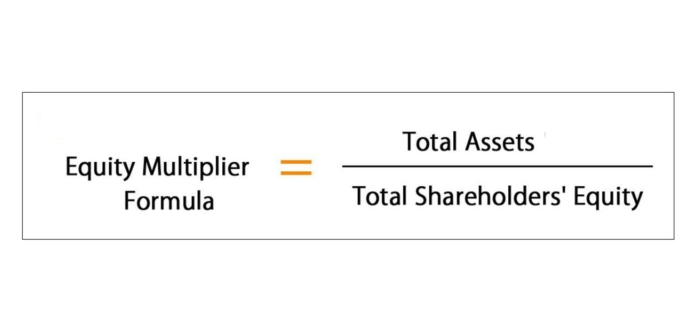
Still, the company has also significantly improved its profitability (income/sales) and how much sales it generates from its assets (sales/assets) over the same period. In other words, Illinois Tool Works is excellently sweating its assets, even http://furniterra.ru/members/1221/ if those assets were supported by taking on more debt. The equity multiplier is a financial ratio used to measure how a company finances its assets. Simply put, it's the assets of the company divided by shareholders' equity rather than debt. The equity multiplier is calculated by dividing the company's total assets by its total stockholders' equity (also known as shareholders' equity). There can be times when a high equity multiplier reflects a company's strategy that makes it more profitable and allows it to purchase assets at a lower cost.

equity multiplier

Relationship between debt ratio and equity multiplier

The table below shows a very impressive increase in ROE over the 2013 through 2022 period. Since the equity multiplier measures the leverage level of the company, the higher it is, the greater the extent of leverage. When investors compare the two companies, they are likely to invest in Watermilk.

Calculating the Debt Ratio Using the Equity Multiplier

When a firm is primarily funded using debt, it is considered highly leveraged, and therefore investors and creditors may be reluctant to advance further financing to the company. A higher asset to equity ratio shows that the current shareholders own fewer assets than the current creditors. A lower multiplier is considered more favorable because such companies are less dependent on debt financing and do not need to use additional cash flows to service debts like highly leveraged firms do. Equity multiplier (also called leverage ratio or financial leverage ratio) is the ratio of total assets of a company to its shareholders equity. A high equity multiplier means that the company's capital structure is more leveraged i.e. it has more debt. The equity multiplier is also used to indicate the level of debt financing that a firm has used to acquire assets and maintain operations.

  • The DuPont analysis looks at the various components of a company's return on equity -- in other words, earnings divided by shareholders' equity.
  • Equity multiplier is also known as financial leverage ratio or leverage ratio.
  • To gauge how the company is doing compared to its competitors, calculate the equity multiplier of its direct competitors.
  • Both creditors and investors use this ratio to measure how leveraged a company is.
  • A high equity multiplier shows that the company incurs a higher level of debt in its capital structure and has a lower overall cost of capital.
  • On the other hand, Verizon’s multiplier risk is high, meaning that it is heavily dependent on debt financing and other liabilities.

The values for the total assets and the shareholder’s equity are available on the balance sheet and can be calculated by anyone with access to the company’s annual financial reports. When a firm’s assets are primarily funded by debt, the firm is considered to be highly leveraged and more risky for investors and creditors. This also means that current investors actually own less of the company assets than current creditors. The equity multiplier is a ratio used to analyze a company’s debt and equity financing strategy. A higher ratio means that more assets were funding by debt than by equity. The equity multiplier is a useful tool for investors to monitor risk and understand how a company generates returns for investors.

What Is the Equity Multiplier?

In general, it is better to have a low equity multiplier because that means http://ilsanny.ru/news/3944-sony-pictures-bulletproof.html a company is not incurring excessive debt to finance its assets. Instead, the company issues stock to finance the purchase of assets it needs to operate its business and improve its cash flows. On the other hand, company DEF, which is in the same sector as company ABC, has total assets of $20 million and stockholders' equity of $10 million. This means company DEF uses equity to finance 50% of its assets and the remaining half is financed by debt.

Accrued Revenue Meaning, Vs Deferred Revenue

Post by

Adjustment for accrued revenues lets you cover items on your balance sheet that otherwise wouldn’t appear until your pay come through. Running a business isn't always as simple as trading your product or service for cash up-front. When managing large orders and long projects, you may not see a payment right away. While you earn revenue after selling a product or service, payment delays lead to accrued revenues. In cash transactions for earned revenue, accrual accounting for revenue isn’t necessary, assuming the transaction is recorded at the time of the sale or service.

Accrued Income: Meaning, Examples, Journal Entries in Accounting

In accounting, accrued income is treated as a current asset on the balance sheet and recognised as earned revenue on the income statement, even if the cash has not yet been received. This treatment follows the accrual principle, ensuring that income is recorded in the period in which it is earned, not when the cash is accepted. Accrued revenues are revenues earned by a company but for which the customer hasn’t made a payment. The reason why companies record accrued revenues is to conform to accounting standards and concepts, such as accruals and matching concepts. However, companies must first ensure a transaction meets the preconditions necessary to recognize it.

accrued revenue journal entry

Two main accrual accounting principles

Around 60% of investors prioritize revenue recognition when evaluating a company’s financial position. accrued revenue journal entry They also lose credibility, which can cost them funding and future opportunities. This removes the accrued revenue from the books and replaces it with cash, ensuring accurate financial reporting. Accrued revenue ensures the balance sheet reflects all earned income, offering a more accurate view of a company’s liquidity and financial position. Investors, lenders, and stakeholders rely on this information to assess whether a company has enough account receivables to support its short-term obligations. Without accrued revenue, financial statements can misrepresent a company’s performance, leading to incorrect valuations, tax miscalculations, and compliance risks.

The Critical 8 Steps of the Accounting Cycle

Deferred revenue occurs when a company receives payment for a product or service it has yet to provide. Since the company still owes the customer something, it is recorded as a liability on the balance sheet under unearned revenue. As the company delivers the service or product over time, it gradually moves the deferred revenue to a revenue account in the income statement. Accrued revenue is any revenue earned by a company or business for which it hasn’t received a payment at the time of delivering the goods. Accounting standards require a company to recognize revenues when it earns them, not when it receives cash.

accrued revenue journal entry

How to Record Accrued Income?

She is a former CFO for fast-growing tech companies with Deloitte audit experience. When she’s not writing, Barbara likes to research public companies and play Pickleball, Texas Hold ‘em poker, bridge, and Mah Jongg. On top of the $100 principal payment, your friend owes you $35 in accrued interest. Double Entry Bookkeeping is here to provide you with free online information to help you learn and understand bookkeeping and introductory accounting. Emeritus, a higher edtech start-up, which is backed by SoftBank announced in 2023 that they would become a profitable venture in the next accounting or assessment year ( ). They raised funds in August 2021 and were valued at approximately $3.2 billion in 2023.

Accrued income has been earned but not received or recorded by the end of the accounting period. Accrued revenue is shown as adjusting journal entries under the current assets category in the balance sheet and as an earned revenue in the income statement of the company. When the payment is cleared, it is recorded as an adjusting entry to the asset account for accrued revenue. Accrued revenue is the revenue that the company has already earned but has not received the payment from the customers yet. Under the accrual basis of accounting, revenues should be recognized when they are earned regardless of the time of money received. Likewise, the company needs to make the proper journal entry to recognize the accrued revenue in the correct accounting period.

  • Examples of accrued income – Interest on investment earned but not received, rent earned but not collected, commission due but not received, etc.
  • Whether you work in construction or SaaS, these invoices can take months to process.
  • Under the accrual basis of accounting, the financial transactions are to be recorded as and when they occur.
  • Accrued revenue ensures the balance sheet reflects all earned income, offering a more accurate view of a company’s liquidity and financial position.

Many of these businesses charge customers at the end of a billing period rather than upfront, meaning they have earned revenue before payment. Accrued revenue appears as a current asset on the balance sheet under accounts receivable or accrued income. In this case, at the period-end adjusting, the company needs to account for all of these accrued revenues. This is due to without the journal entry for accrued revenue when it is earned, both revenues in the income statement and assets in the balance sheet will be understated.

With cash basis accounting, you’ll debit accrued income on the balance sheet under the current assets as an adjusting journal entry. On March 31, 2017, Corporate Finance Institute provided $75,000 worth of online resources to Lasdo Company. However, income must be recorded for the accounting period it’s earned in, regardless of whether payment is received. For deferred revenue , cash is received in advance of the product delivery or time of use, or service performance.

  • In accounting, accrued income is treated as a current asset on the balance sheet and recognised as earned revenue on the income statement, even if the cash has not yet been received.
  • As a result, you have to create an accrued revenue journal entry twice throughout the project—one for each milestone.
  • Accrued income is a quick asset because it is easily convertible into cash within a short period, typically within 12 months.
  • Accrued revenue is income a company has earned but hasn’t yet received payment for.
  • As specified by Generally Accepted Accounting Principles (GAAP), accrued revenue is recognized when a performance obligation is satisfied by the performing party.

How to Record?

Oracle Applications or Oracle Apps is the business applications software in the Oracle ERP system. Oracle Apps works with financial applications, including the Financials Accounting Hub , to drill down to the detailed accrual journal entry level. Accrual accounting is required by U.S.-based GAAP instead of cash accounting. Accrual accounting is an accounting method where revenue or expenses are recorded when a transaction occurs versus when payment is received or made. As important as it is to distinguish between different types of revenue and record them accurately in your books of accounts, it should not be burdensome.

Lenders incur interest at a steady rate, but customers pay that interest back after it’s accrued. So, whether interest payments occur month by month or after paying off the principal, lenders receive their money down the line. Most businesses accrue revenue and expenses as a part of their standard operations. In verticals like construction, firms earn most of their income as accrued revenue. Conversely, a standard brick-and-mortar retailer accrues expenses when they receive new inventory before an invoice.

Most of the work took place in February, but you finished the project in March. Based on revenue recognition, you would record the revenue for the accounting period in March since you earned your income upon completion. When a customer orders equipment, you send them an invoice, including the due date.

1 15 Closing Entries Financial and Managerial Accounting

Post by
does income summary have a normal balance

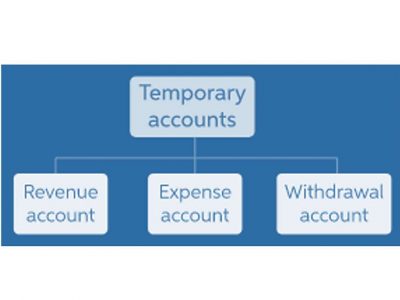
We know the change in the balance includes net income and dividends. Therefore, we need to transfer the balances in revenue, expenses and dividends (the temporary accounts) into Retained Earnings to update the balance. This process updates retained earnings and resets the income summary account to zero. You can either close these accounts directly to the retained earnings account or close them to the income summary account. The income summary entries are the total expenses and total income from your company’s income statement. Then, you transfer the total to the balance sheet and close the account.

  • Still others use it when referring to nonoperating revenues, such as interest income.
  • After preparing the closing entries above, Service Revenue will now be zero.
  • Printing Plus has $100 of supplies expense, $75 of depreciation expense–equipment, $5,100 of salaries expense, and $300 of utility expense, each with a debit balance on the adjusted trial balance.
  • Accountants and bookkeepers often use T-accounts as a visual aid to see the effect of a transaction or journal entry on the two (or more) accounts involved.
  • At the end of the year, businesses gather all revenue and expenses and place them into an income summary account.

Income Summary Account

Accounts are the bookkeeping or accounting records used to sort and store a company’s transactions. Some of the accounts will have titles such as Cash, Accounts Receivable, Inventory, Equipment, Accounts Payable, Common Stock, Sales, Wages Expense, Rent Expense, Interest Expense, and perhaps hundreds more. Hence, these accounts are also known as general ledger accounts. An asset account in a bank’s general ledger that indicates the amounts owed by borrowers to the bank as of a given date.

does income summary have a normal balance

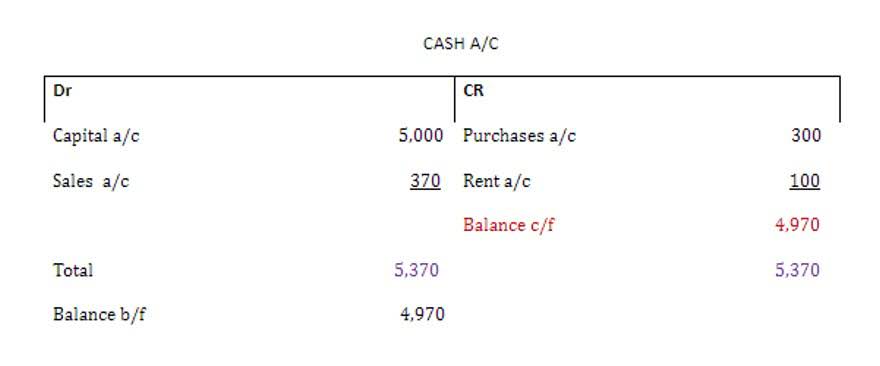
Is cash a debit or credit?

This is a non-operating or “other” item resulting from the sale of an asset (other than inventory) for more than the amount shown in the company’s accounting records. The gain is the difference between the proceeds from the sale and the carrying amount shown on the company’s books. You should consider our materials to be an introduction to selected accounting and bookkeeping topics (with complexities likely omitted). Bakery Accounting We focus on financial statement reporting and do not discuss how that differs from income tax reporting.

does income summary have a normal balance

Advance Your Accounting and Bookkeeping Career

We also have an accompanying spreadsheet which shows you an example of each step. Double Entry Bookkeeping is here to provide you with free online information to help you learn and understand bookkeeping and introductory accounting. Our T-account for Retained Earnings now has the desired balance. CARES Act The balance in Retained Earnings was $8,200 before completing the Statement of Retained Earnings. According to the statement, the balance in Retained Earnings should be $13,000.

Other approaches related to Income summary account

does income summary have a normal balance

The term losses is also used to report the writedown of asset amounts to amounts less than cost. It is also used to refer to several periods of net losses caused by expenses exceeding revenues. Fees earned from providing services and the amounts of merchandise sold.

  • For example, terms of “1/10, n/30” indicates that the buyer can deduct 1% of the amount owed if the customer pays the amount owed within 10 days.
  • If a company pays the rent for the current month, Rent Expense and Cash are the two accounts involved.
  • Income Summary allows us to ensure that all revenue and expense accounts have been closed.
  • At the beginning of the closing process income summary has no balance.

The amount in the Supplies Expense account reports the amounts of supplies that were used during the time interval indicated in the heading of the income statement. A current asset representing the cost of supplies on hand at a point in time. The account is usually listed on the balance sheet after the Inventory account. To keep a company’s financial data organized, accountants developed a system that sorts transactions into records called accounts.

does income summary have a normal balance does income summary have a normal balance

The Income Summary is very temporary since it has a zero balance throughout the does income summary have a normal balance year until the year end entries]] are made. Next, the balance resulting from the closing entries will be moved to Retained Earnings or the owner's capital account. Other claims use for this account include revenue and expense summary, profit and loss summary as well as income and expense summary. From the table above it can be seen that assets, expenses, and dividends normally have a debit balance, whereas liabilities, capital, and revenue normally have a credit balance.

Equity Multiplier: A Detailed Examination of its Role in Financial Analysis

Post by
equity multiplier formula

While this can boost returns on equity during profitable periods, it also raises financial risk. Companies with high ratios may struggle in downturns or when interest rates rise, as debt servicing costs can erode profitability. The equity multiplier is calculated by dividing a company’s total assets by its total equity. For example, if a company has total assets of $500 million and total equity of $200 million, the equity multiplier would be 2.5.

  • Since debt is referring to all liabilities including bills payable, in the case of negative working capital, there are assets that are financed by capital having no cost.
  • This ratio is used by creditors to determine the financial risk of lending money to a company.
  • Sometimes, creditors turn down loan requests of struggling companies who do not have enough equity to fund their operations.
  • Investors commonly look for companies with a low equity multiplier because this indicates the company is using more equity and less debt to finance the purchase of assets.
  • Businesses with a higher equity multiplier generally are more leveraged.
  • It’s an easy way to see how valuable your equity investment is compared to others.

The Relationship between ROE and EM

equity multiplier formula

Would you like to find out more about the equity multiplier and the way it works? Boost your confidence and master accounting skills effortlessly with CFI’s expert-led courses! Choose CFI for unparalleled industry expertise and hands-on learning that prepares you for real-world success. CFI is the global institution behind the financial modeling and valuation analyst FMVA® Designation. CFI is on a mission to enable anyone to be a great financial analyst and have a great career path.

equity multiplier formula

Strategic Implications for Businesses

  • For example, a high equity multiplier paired with strong interest coverage and steady cash flows may indicate effective debt management.
  • Thus, a high equity multiplier might indicate that a company is in expansion mode.
  • The company's total assets were $351 billion, and the book value of shareholders' equity was $63 billion.
  • For that, you need to calculate the equity multiplier ratio, so you rush to get the balance sheet.
  • It is difficult to know the real picture of the company by just looking at one ratio, and the same holds true for the equity multiplier ratio as well.

A bank with a high equity multiplier might not be well-equipped to handle these types of situations. The high dependence on debt can lead to significant interest expenses, payroll which can have a huge impact on net earnings, especially in periods of high interest rates or economic downturns. Such circumstances can greatly affect the company's capacity to cover its fixed financial obligations and signal financial instability.

equity multiplier formula

The Financial Modeling Certification

  • Explore a more comprehensive formula that considers additional financial components, providing a nuanced perspective on a company’s financial leverage.
  • So let’s take a look at what high equity multiplier and low equity multiplier might mean.
  • This connection underlines the importance of analyzing financial statements holistically.
  • Basically, your company supplies and installs cables in homes and company buildings.
  • This means that for every $1 of equity, Company XYZ has $2 of debt ratio or other liabilities.

As a result of this software, they are able to remain on top of their client's https://www.bookstime.com/articles/hubdoc requirements by monitoring a timely delivery. An online accounting and invoicing application, Deskera Books is designed to make your life easier. This all-in-one solution allows you to track invoices, expenses, and view all your financial documents from one central location.

equity multiplier formula

Equity Multiplier and Risk Management

Accounts receivable aging report: Guide

Post by

CFOs compare their turnover ratios against industry benchmarks to assess competitive performance. Bad debt ratio indicates the percentage of receivables that become uncollectible. Payment behavior patterns reveal customer health before cancellation requests arrive. Companies paying 30+ days late typically reduce usage, downgrade plans, or cancel within 90 days. Companies with tight cash flow requirements typically benefit more from customized aging structures than those with stable payment patterns.

Financial Close Solution

account receivable (a/r) aging reports

When a receivable is deemed uncollectible from an account, it’s called a doubtful account and the amount becomes a bad debt. Bad debts need to be written off in financial statements, and allowances must be made for doubtful accounts to ensure accurate and compliant bookkeeping. If outstanding balances and invoices continue to move from bucket to bucket, you may be offering your product or services essentially for free. You can sever ties with these struggling customers or come to a solution with payment plans or potential discounts or service downgrades. You can also look at your collections process to identify where you can improve your follow-up communication. These reports organize customer invoices by your aging schedule —  incremental 30-day date “buckets” that represent periods of time since the invoice’s due date.

Balance Sheet

Analyze the data to identify trends, such as customers who consistently pay late or categories with high overdue balances. Accounts receivable (AR) aging reports clue businesses on which clients are slow-paying or overdue. It shows them which customer accounts to watch and which ones deserve a follow-up to address past-due invoices. The aging report helps you see who’s paying on time and who’s falling behind, giving you a clear picture of your cash flow and collections efforts. To help you get started, we’re answering your common questions and addressing the basics of accounts receivable aging reports. Higher percentages signal potential collection issues or invoice processing delays.

Maximize your collections:

  • Additionally, having a clear picture of receivables enables more effective forecasting and budgeting, ensuring funds are allocated where needed most.
  • These are generally viewed as healthy assets, reflecting sales expected to convert into cash soon, positively impacting liquidity assessments.
  • Each section plays a pivotal role in pinpointing problem accounts and strategizing collections.
  • 7.7 Application of CECL to Trade Receivables While estimates are needed even for current balances, the likelihood of loss increases significantly once a receivable is overdue.

As businesses continue to evolve, the importance of AR aging reports in financial management cannot be overstated. These reports offer invaluable insights into a company’s cash flow, credit risk, and overall financial health. Managing accounts receivable (AR) effectively is crucial for maintaining healthy cash flow and sustainable growth. Leveraging technology to access real-time AR insights allows businesses to make informed decisions, improve efficiency, and enhance customer relationships. An Accounts Receivable (AR) Aging Report is vital for managing outstanding invoices and tracking customer payments. Effectively preparing this report ensures businesses can stay on top of overdue accounts and enhance their cash flow.

In fact, the approximate amount of receivables that may not be collected is used as the ending balance of your allowance for doubtful accounts. Accounts receivable aging reports allow you to quickly identify who is not paying their invoices on time. If you’re having trouble capturing owed revenue, the aging report can surface problem customers and in turn, you can direct your attention and staff’s efforts where necessary. In maintaining an accounts receivable aging schedule, you get a list of potential defaulters and customers still in the process of paying off debt. Collections teams can then ensure they’re communicating with customers in the most appropriate ways and enforcing suitable payment policies.

Overlooking Small Balances

account receivable (a/r) aging reports

It is a tool used in the collections department and for management decision-making to assess the credit policy and client creditworthiness. Typically, the longer your debts remain uncollected, the chances of them going uncollected forever will keep increasing. A periodic review of your aging reports helped by accounting software will give you the direction needed to ensure you keep bad debts under control. A 2023 survey from Atradius found late payments have been steadily increasing and now average 49% of all B2B sales, with a 73-day average wait to collect payment. The level of bad debts also remains a concern at 6% of all B2B invoiced sales. For instance, during an internal financial review, a company might use the A/R Aging Report to evaluate how many invoices remain unpaid beyond 30 days, 60 days or 90 days.

  • The time brackets could be categorized as anything from 1 to 30 days, 30 to 60 days, 60 to 90 days, and so on.
  • To calculate AR aging, look at how many days past due an outstanding invoice is.
  • An aging report helps you identify such scenarios and keeps you continually aware of your company's cash flow.
  • Analyze the aging of accounts receivable to assess the effectiveness of your collection efforts and credit risk management strategies.
  • It provides a snapshot of the amounts owed to external parties for goods or services received but not yet paid for.

A good AR aging percentage typically means having a high proportion of receivables in the “current” or “1-30 days overdue” categories, ideally 80-90%. Lower percentages in older categories (e.g., over 60 days) indicate better receivables management and timely collections. If the customer does not pay you back on time, you will end up with amounting interests that could negate any amount of profits you might get whether the customer ultimately pays you. An aging report helps you identify such scenarios and keeps you continually aware of your company's cash flow. Certain invoices are so long past the due date that you will not be able to collect them and will have to perform a write-off. There could be many more reasons a payment could be deemed uncollectible, like the payers being unable to pay back or other conditions.

An aging report (or an accounts receivable aging report) refers to a record of overdue invoices, accounts receivable, or unused credit memos by periodic date changes. Businesses use aging reports to determine which customers have outstanding invoice balances. Bad debts are outstanding credit sales accounts that the business will not be able to collect. While these are a fact of life, businesses naturally want to avoid them whenever possible.

Improve collection efficiency by identifying areas for enhancement and implementing strategies. With Tradogram, you can easily generate real-time aging reports, track outstanding payments, and streamline your collections process. Usually, a lower collection period is preferred over a higher one as it indicates how effective a business is in collecting payments on time. However, if your collection period is high, then your aging report will show more overdue accounts. Here’s when account receivable (a/r) aging reports you might revisit your payment terms so that you can collect more of your dues on time.

What are the common methods to finance accounts receivable, and how do they align with a SaaS business model?

Aging accounts receivable is a periodic report that categorizes a company’s accounts receivable based on the time an invoice has been overdue for payment. This report normally comprises columns with 30-day date ranges and provides the total receivables that are due now and those that are due in the future. Use the report to organize and filter out the customers that owe you the most and whose payments have been overdue for a long time.

AR aging reports inform credit policies

This proactive approach helps address potential issues before they become bad debt. For example, if you notice a decline in on-time payments from a specific customer, reach out to understand the reason and offer assistance if needed. Accounts receivable aging reports offer more than just a list of unpaid invoices—they deliver strategic advantages that help optimize operations and reduce risk. Based on the above report, the management can decide to provide $114,87,873.

How to Read the Balance Sheet for Financial Reporting

Post by
balance sheets for dummies

International accountants focus on QuickBooks working with businesses that operate around the globe. They know about trade laws, foreign currency rates, and the accounting principles of other countries. Cost accountants create a constant record of all costs incurred by the business.

  • These are listed first and are important for figuring out how liquid a company is.
  • Did your business manager go out and borrow $60,000 to 100% finance a new Escalade for sales calls?
  • It pulls data from different accounts, giving you a complete snapshot of your company’s finances.
  • Below, I’ll discuss some common forms of accounting you might encounter.
  • Both an annual and 10-K report can help you understand the financial health, status, and goals of a company.
  • The balance sheet provides a snapshot of a company's financial condition at a specific moment.

Debt-to-Equity Ratio

balance sheets for dummies

Small businesses tend to have simple, less complicated reports and can display more detail on the report. These are assets owned and used by the business, such as a building or vehicle, that will not be sold any time soon and will last for many years. Understanding the benefits of this report are anadvantage for business owners when making money decisions. You can use this cheat sheet as a quick reference whenever you need guidance on accounting basics. The more you understand your finances, the better you can https://www.bookstime.com/ plan for growth.

  • That is especially true if a company can generate high returns on its assets or it's growing rapidly.
  • This category is usually called “owner’s equity” for sole proprietorships and “stockholders’ equity” or “shareholders’ equity” for corporations.
  • However, valuation of companies is an art rather than a science (which we can discuss on a new blog post) but differs from net assets in the following key ways.
  • However, net worth isn't a good term because it implies that the business is worth the amount recorded in its owners’ equity accounts.
  • In this case, you don’t include assets like real estate or other long-term investments.
  • Plus, reviews of your financial health need to be completed in a timely way.

ACCOUNTING AND FINANCIAL TEMPLATES

In the final section of a balance sheet, you’ll need to understand owner’s equity (for sole proprietorships, LLCs, or partnerships) or shareholders’ equity (for corporations). We’ll do a quick, simple analysis of two balance sheets, so you can get a good idea of how to put financial ratios into play and measure your company’s performance. Learn how to build, read, and balance sheets for dummies use financial statements for your business so you can make more informed decisions. The central equation used in balance sheets is assets minus liabilities equals shareholder equity. On the current side, this can include things like payroll obligations, accrued benefits, and other items due within a year.

balance sheets for dummies

Understand the recipe

balance sheets for dummies

On the other, the clients pay you for them, along with the actual services you offer, so they’re now income. I like to think of accounting as the backbone of any successful business, providing the essential data and insights needed to drive informed decision-making. Your revenue is the total amount of money collected in exchange for goods or services before any expenses are taken out.

  • You’ll need to comply with both federal regulations and the states in which you operate your business.
  • By law, accountants for all publicly traded companies must comply with GAAP.
  • It’s easy to overlook finances when you’ve handed them off to someone else.
  • Accruals are credits and debts that I’ve recorded but not yet fulfilled.
  • Business owners use accounting to track their financial operations, meet legal obligations, and make strong business decisions.
  • These ratios can provide insight into the company's operational efficiency.
  • Shareholder equity or Owner’s equity is the difference between a company’s assets and liabilities.

You segregate all your raw data about transactions and taxes into records that give you a clear picture of your finances. By partnering with experts, businesses can rest assured that their financial reports meet Financial Accounting Standards and requirements, providing reliable data for smart decision-making. Professional services also save valuable time and resources while offering deeper insights into financial performance and trends to support strategic growth.

Back to Top